
10 Best Email Marketing Platforms for Ecommerce in 2025

When it comes to choosing the best email marketing tools, there’s rarely a one-size-fits-all solution. Each platform is different, and while most offer similar core features, the details can make all the difference.
That’s what makes selecting the right email marketing platform even more challenging. Even experienced marketers can struggle to find the perfect tool for their brand.
For instance, if you want to build advanced email campaigns with deep personalization, some options will suit you better than others. On the other hand, if you prefer simplicity over complex technical features, that’s equally important to consider.
Most email marketing services include a set of key features such as:
Ready-to-use templates that can be customized to match your brand.
Audience segmentation tools to send targeted emails based on customer profiles.
Smart automation to enhance your email marketing without constant manual input.
Signup forms that integrate easily with your website or Shopify store.
Detailed analytics to track and evaluate your campaign performance.
High email deliverability rates, ensuring your messages reach your subscribers’ inboxes.
Transparent and affordable pricing, so you’re not hit with huge bills as your list grows.
As you’ll see below, each platform approaches these features differently. If you’re looking for specialized functions beyond the basics, explore the following list of the 10 Best Email Marketing Platforms for Ecommerce in 2025 to find the one that best fits your needs.
he 10 best tools to get started with email marketing are:
1. Mailchimp

Difficulty: Easy, intuitive interface and great for beginners. Cost: Free plan available (up to 500 contacts); paid plans start around $13/month. Unique Feature: Drag-and-drop editor with powerful automation for small businesses.
2. Klaviyo

Difficulty: Medium — built for ecommerce, but user-friendly once you get used to it.
Cost: Free up to 250 contacts; paid plans start around $20/month.
Unique Feature: Deep Shopify and WooCommerce integrations with advanced segmentation.
3. Brevo (formerly Sendinblue)
Difficulty: Easy — designed for marketers without technical skills.
Cost: Free plan for up to 300 emails/day; paid plans from $25/month.
Unique Feature: Combines email, SMS, and chat in one platform.
4. ActiveCampaign
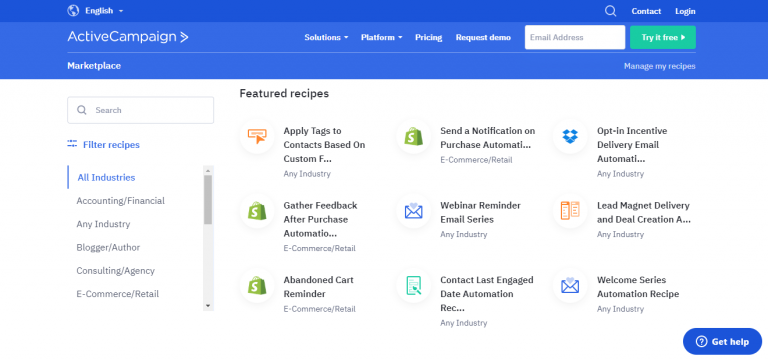
Difficulty: Medium to Advanced — ideal for users who want powerful automation.
Cost: No free plan; starts around $39/month.
Unique Feature: Industry-leading automation builder for complex email workflows.
5. ConvertKit
Difficulty: Easy — perfect for creators, bloggers, and small ecommerce shops.
Cost: Free up to 1,000 subscribers; paid plans from $15/month.
Unique Feature: Simple automation and tagging system ideal for growing audiences.
6. Omnisend
Difficulty: Easy — built specifically for ecommerce stores.
Cost: Free up to 250 contacts; paid plans start at $16/month.
Unique Feature: Pre-built ecommerce automation flows (welcome, cart abandonment, etc.).
7. HubSpot Email Marketing

Difficulty: Medium — lots of features, but easy onboarding.
Cost: Free tools available; paid plans from $20/month (Marketing Hub Starter).
Unique Feature: All-in-one CRM + email marketing with built-in analytics.
8. Moosend
Difficulty: Easy — clean interface and minimal setup required.
Cost: Free trial available; paid plans start at $9/month.
Unique Feature: Affordable automation and AI-powered recommendations.
9. GetResponse
Difficulty: Medium — flexible, with many templates and tools.
Cost: Free for up to 500 contacts; paid plans from $19/month.
Unique Feature: Built-in landing page and webinar features.
10. Constant Contact
Difficulty: Easy — perfect for beginners and small businesses.
Cost: Free trial available; paid plans start around $12/month.
Unique Feature: Excellent customer support and easy setup for first-time users.
Conclusion of 10 Best Email Marketing Platforms for Ecommerce in 2025
Selecting the right email marketing platform for your ecommerce store can make a huge diference in how effectively you connect with your customers and get sales. With so many tools available, from Mailchimp and Klaviyo to Omnisend, ActiveCampaign, and HubSpot, the best choice really depends on your goals, your level of experience, and the type of brand you’re building.
If your main focus is ecommerce growth and automation, platforms like Klaviyo and Omnisend are designed specifically for online stores. They offer powerful Shopify and WooCommerce integrations, pre-built automation flows like abandoned cart emails, and advanced customer segmentation to deliver personalized experiences that increase revenue and retention.
For small businesses or startups that want something simple yet effective, Mailchimp, Brevo, and ConvertKit provide an excellent balance between ease of use and smart automation. Their drag-and-drop editors, ready-to-use templates, and affordable pricing make them ideal for beginners who want to start sending professional, branded emails quickly.
If your business requires complex workflows, lead nurturing, or CRM integration, then ActiveCampaign, HubSpot, or GetResponse might be a better fit. These platforms combine advanced automation with in-depth analytics, allowing you to design multi-step customer journeys that improve engagement and conversions.
Ultimately, the best email marketing tool for ecommerce is the one that fits your brand’s unique needs, budget, and growth stage. The key is to start testing, analyzing your results, and optimizing your campaigns over time. With the right platform, you can build meaningful relationships with your audience, turn one-time buyers into loyal customers, and grow your revenue on autopilot.
In today’s competitive ecommerce landscape, email marketing remains one of the highest-ROI channels for building customr loyalty and driving repeat purchases. Whether you’re running a small Shopify store or managing a large online brand, investing in a solid email marketing strategy and choosing the right platform to power it—is one of the smartest moves you can make in 2025 and beyond.


Comments